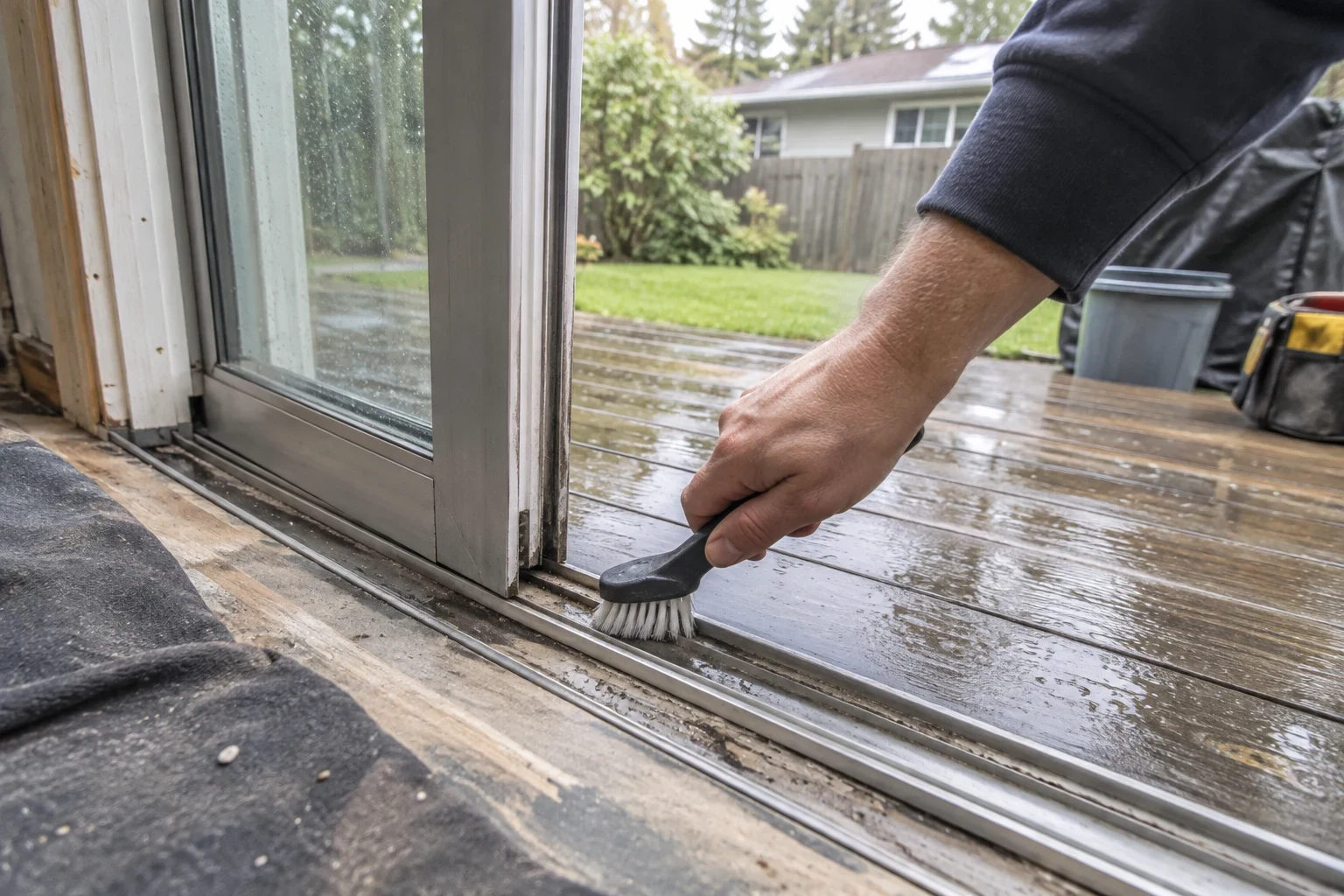
What is the best way to clean a sliding glass door in Edmonds?
Most people wash the glass and skip the track, and the track is where a sliding door starts to fail.
What is the best way to clean a sliding glass door?
The best way is to work from the bottom up. Vacuum and scrub the track first, then wash the frame, then clean the glass with mild soapy water and a squeegee. Finish by wiping the rollers and clearing the weep holes. Clean glass on a dirty track still drags, sticks and wears out early.
Why start with the track instead of the glass
Grit in the bottom track acts like sandpaper on the rollers. Every time you slide the door, sand, pet hair and dead bugs grind into the wheels and the metal rail they ride on. If you wash the glass first, the dirty water runs down into that track and makes the mess worse.
Start low. Get the track clean and dry, and the rest of the job goes faster.
Step by step: how we clean a sliding glass door
You do not need special products. Warm water, a little dish soap and a few basic tools handle almost every door we see. Open the door about halfway so you can reach both ends of the track.
- Vacuum the track with a crevice tool. Get the corners where debris packs in tight.
- Scrub the track with an old toothbrush or a narrow nylon brush and soapy water. Wipe it out with a rag and vacuum again once it dries.
- Wash the frame with a soft cloth and the same soapy water. On vinyl, skip anything abrasive. On wood, use a damp cloth, not a soaking one.
- Clean the glass with soapy water or a mix of water and white vinegar. Pull it dry with a squeegee, top to bottom, wiping the blade after each pass.
- Buff the edges and corners with a dry microfiber cloth to catch drips and streaks.
- Pop out the screen, rinse it with a hose, let it dry, then set it back in its track.
What to avoid so you don't damage the door
Most sliding doors have tempered glass. It is tough, but it scratches easier than people think, especially if there is grit on the surface. A razor blade or steel wool can leave marks you will see every time the sun hits it.
Skip oil and grease in the track. Oil-based sprays feel slick for a week, then they hold onto dust and turn into a sticky paste. If the door needs help sliding, a small amount of dry silicone spray on the rail is better. Ammonia cleaners can also dull tinted films and some frame finishes, so keep it simple.
- No razor blades or scouring pads on the glass
- No oil-based lubricants in the track
- No pressure washer aimed at the frame or seals
- No harsh solvents on vinyl or painted wood
Weep holes, moss and the wet months
Look at the outside of the bottom frame. You will usually find small slots called weep holes. They let rainwater that gets into the track drain back out. When they clog with dirt or moss, water sits in the track and can spill over onto your floor.
Around Edmonds, the long damp stretch from fall into spring is when we see this most. A pipe cleaner or a thin wire pushed gently into each slot clears them. Pour a cup of water into the track afterward and watch it drain. If it pools, keep working the holes until it runs out.
Green or black film on the outer frame is usually mildew. A soft brush with soapy water takes it off. Doing this once in fall and once in spring keeps it from building up.
When cleaning won't fix it, especially on older doors
Some problems look like dirt but are not. On older houses we often find sliders that were patched years ago, rollers that are no longer made, or a track that was bent and hammered flat by a past owner. Cleaning helps, but it cannot fix worn parts.
Fog or haze between the two panes is a failed seal, not a dirty window. No cleaner will reach it. A door that still grinds or jumps after the track is spotless usually has worn rollers. And if the bottom of a wood frame feels soft when you press it, water has been getting in for a while. Those are the times to have someone look at it.
- Fog or moisture trapped between the panes
- Door still drags or catches after a full cleaning
- Daylight or drafts showing around the closed door
- Soft, dark or cracked wood at the bottom of the frame
- A lock that no longer lines up with the latch
More questions about sliding door care
- How often should I clean the track?
- Every couple of months is a good habit, more often if you have pets or the door gets heavy use. A quick vacuum takes a few minutes and saves the rollers.
- Can I clean the rollers without taking the door off?
- You can wipe what you can reach with a damp rag while sliding the door slowly back and forth. Lifting the panel out is a two-person job on most doors, and on older sliders it can be tricky, so we would not try it alone.
- Is vinegar safe on low-E glass?
- Yes. On most doors the low-E coating sits on an inside surface between the panes, so it never touches your cleaner. A diluted vinegar mix or mild soap is fine on the glass you can reach.
- My door is clean but still hard to slide. What now?
- Check whether the door sits level and the rollers turn freely. If it still sticks, it is likely worn rollers or a damaged track, and that is a repair, not a cleaning job.
Clean door, still sticking?
If your slider fogs, drags or leaks after a good cleaning, give us a call. We will talk through what you are seeing, look at the rollers, track and frame, and give you a free quote on fixing or replacing it. No pressure either way.